Judicial Review in Upholding Constitutional Supremacy

Judicial review ensures Indian laws and actions align with the Constitution, allowing courts to nullify unconstitutional measures.

By Advocate Suresh Tripathi |Published: 2024-10-21


Placeholder article image


Judicial review is a cornerstone of India’s democracy, ensuring that government actions comply with constitutional principles. It allows the Supreme Court and High Courts to scrutinize and, if necessary, invalidate laws or executive actions inconsistent with the Constitution. Although the term “judicial review” is not explicitly mentioned in the Constitution, its essence is embedded in Articles 13, 32, 136, 142, and 226, empowering the judiciary to uphold constitutional values and safeguard the rule of law.

Judicial review is a key check and balance within the separation of powers, allowing courts to ensure that legislative and executive actions do not exceed constitutional limits, especially in safeguarding citizens' fundamental rights. Since the landmark ‘Kesavananda Bharati v. State of Kerala’ (1973), the judiciary has had the power to invalidate even constitutional amendments that violate the "basic structure" of the Constitution, protecting core democratic values.

A recent example is the Supreme Court's judgment on Section 6A of the Citizenship Act, 1955, which upheld citizenship provisions for certain immigrants from Bangladesh while affirming the judiciary’s role in overseeing legislative actions. Justice Surya Kant, writing for the bench, rejected the Centre's argument that citizenship policy was beyond judicial review, stating that judicial review maintains the balance of power and ensures the Constitution prevails.

One of judicial review's primary functions is the protection of fundamental rights. Article 32 allows individuals to directly approach the Supreme Court for rights violations, while Article 226 grants similar powers to the High Courts. In ‘Maneka Gandhi v. Union of India’(1978), the Court expanded judicial review to include procedural fairness, ensuring that laws infringing personal liberty are struck down even if they follow legal procedure. This has made judicial review a crucial tool for defending individual freedoms and ensuring that the Constitution evolves with changing societal needs.

Several landmark cases have further shaped judicial review in India. In ‘A.K. Gopalan v. State of Madras’ (1950), the Court took a narrow view of personal liberty, but this case laid the foundation for future expansion of rights. In ‘Minerva Mills v. Union of India’ (1980), the Court reinforced the basic structure doctrine, invalidating amendments that damage constitutional principles. In ‘I.R. Coelho v. State of Tamil Nadu’ (2007), the Court ruled that even laws placed in the Ninth Schedule, ostensibly shielded from judicial scrutiny, can be reviewed if they violate the Constitution's basic structure.

Judicial review also ensures federal balance, preventing overreach by either the Centre or the States. For example, in ‘State of West Bengal v. Union of India’ (1962), the Supreme Court struck down a central law that sought to control State property, highlighting the judiciary’s role in protecting federal principles.

Judicial review continues to evolve, addressing modern challenges such as privacy rights and environmental justice. In ‘Puttaswamy v. Union of India’ (2017), the Supreme Court declared privacy a fundamental right, expanding the judiciary’s role in defending individual liberties in a digital age.

The recent judgment on Section 6A of the Citizenship Act underscores that judicial review is essential for safeguarding constitutional values, even in complex policy areas. As India continues to evolve, judicial review will remain crucial in shaping a fair and just society, ensuring that no government action transcends constitutional boundaries.


Suresh Tripathi Attorneys: Best Law Advocate in Allahabad Logo
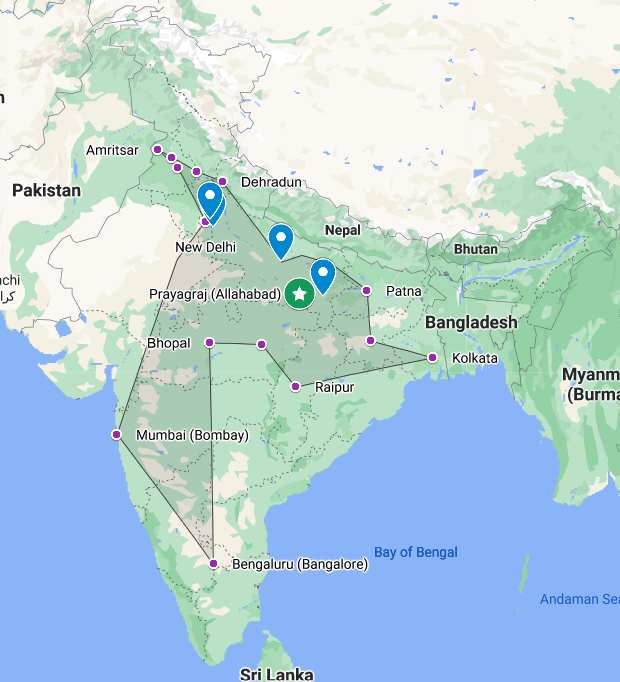
Suresh Tripathi Attorneys: Best Law Advocate in Allahabad Service Locations Map

PRACTICE AREAS

Anticipatory Bail

Arbitration and Mediation

Central Administrative

Civil Law

Competition & Antitrust

Constitutional Rights

Consumer Court Complaints

Corporate Litigation

Covid-19 & Medical

Criminal Defense

Debt Recovery

Divorce Lawyer

Environmental Law

Family Lawyer

Insolvency & Bankruptcy

Insurance & Claims

Intellectual Property

IT Cyber Law

Labor & Employment

Lok Adalat

NCLT

NGOs & Trusts

Personal Injury Accidents

Pro bono

Real Estate & Property

Regulatory & Policy

Renewable Energy Infrastructure

Service Matters

Sports Contracts

Taxation Law

LOCATIONS

Prayagraj/Allahabad

Lucknow

New Delhi & NCR

Noida-Ghaziabad

Mumbai/Bombay

Varanasi

Chandigarh

Amritsar

Jalandhar

Agra

Raebareli

Amethi

Kolkata/Calcutta

Dehradun

Bangalore/Bengaluru

Bhopal

Patna

Ranchi

Raipur

Ludhiana

Jabalpur

Kanpur

Pratapgarh

Sultanpur

Judicial Review in Upholding Constitutional Supremacy

Judicial review ensures Indian laws and actions align with the Constitution, allowing courts to nullify unconstitutional measures.

By Advocate Suresh Tripathi |Published: 2024-10-21


Placeholder article image

Judicial review is a cornerstone of India’s democracy, ensuring that government actions comply with constitutional principles. It allows the Supreme Court and High Courts to scrutinize and, if necessary, invalidate laws or executive actions inconsistent with the Constitution. Although the term “judicial review” is not explicitly mentioned in the Constitution, its essence is embedded in Articles 13, 32, 136, 142, and 226, empowering the judiciary to uphold constitutional values and safeguard the rule of law.

Judicial review is a key check and balance within the separation of powers, allowing courts to ensure that legislative and executive actions do not exceed constitutional limits, especially in safeguarding citizens' fundamental rights. Since the landmark ‘Kesavananda Bharati v. State of Kerala’ (1973), the judiciary has had the power to invalidate even constitutional amendments that violate the "basic structure" of the Constitution, protecting core democratic values.

A recent example is the Supreme Court's judgment on Section 6A of the Citizenship Act, 1955, which upheld citizenship provisions for certain immigrants from Bangladesh while affirming the judiciary’s role in overseeing legislative actions. Justice Surya Kant, writing for the bench, rejected the Centre's argument that citizenship policy was beyond judicial review, stating that judicial review maintains the balance of power and ensures the Constitution prevails.

One of judicial review's primary functions is the protection of fundamental rights. Article 32 allows individuals to directly approach the Supreme Court for rights violations, while Article 226 grants similar powers to the High Courts. In ‘Maneka Gandhi v. Union of India’(1978), the Court expanded judicial review to include procedural fairness, ensuring that laws infringing personal liberty are struck down even if they follow legal procedure. This has made judicial review a crucial tool for defending individual freedoms and ensuring that the Constitution evolves with changing societal needs.

Several landmark cases have further shaped judicial review in India. In ‘A.K. Gopalan v. State of Madras’ (1950), the Court took a narrow view of personal liberty, but this case laid the foundation for future expansion of rights. In ‘Minerva Mills v. Union of India’ (1980), the Court reinforced the basic structure doctrine, invalidating amendments that damage constitutional principles. In ‘I.R. Coelho v. State of Tamil Nadu’ (2007), the Court ruled that even laws placed in the Ninth Schedule, ostensibly shielded from judicial scrutiny, can be reviewed if they violate the Constitution's basic structure.

Judicial review also ensures federal balance, preventing overreach by either the Centre or the States. For example, in ‘State of West Bengal v. Union of India’ (1962), the Supreme Court struck down a central law that sought to control State property, highlighting the judiciary’s role in protecting federal principles.

Judicial review continues to evolve, addressing modern challenges such as privacy rights and environmental justice. In ‘Puttaswamy v. Union of India’ (2017), the Supreme Court declared privacy a fundamental right, expanding the judiciary’s role in defending individual liberties in a digital age.

The recent judgment on Section 6A of the Citizenship Act underscores that judicial review is essential for safeguarding constitutional values, even in complex policy areas. As India continues to evolve, judicial review will remain crucial in shaping a fair and just society, ensuring that no government action transcends constitutional boundaries.