Not Crime. Crisis. Care Needed
India decriminalised suicide attempts. Now we must build systems that replace fear with care, stigma with support, and silence with lifesaving action
By Advocate Suresh Tripathi |Published: 2026-02-12
Rising Suicide Cases: A Silent Emergency, A Collective Responsibility
Suicide is not only a personal tragedy; it is a mirror held up to society. When suicide rates climb, they tell a story not just of individual despair but of systemic fractures — in families, economies, institutions, and cultures of care. In recent years, the steady rise in suicides has become one of the most troubling public health signals of our time. The numbers are stark, but the deeper crisis lies in what they represent: loneliness in crowded cities, shame in competitive classrooms, silence inside homes, and exhaustion behind professional success.
Across India, suicides have reached levels that demand urgent national introspection. More than 170,000 people now die by suicide each year, with rates steadily rising over the past few years. The national suicide rate has crossed 12 per 100,000 population — the highest recorded in decades. Behind these numbers are children overwhelmed by expectations, students crushed by academic pressure, farmers and small business owners burdened by debt, working professionals facing economic uncertainty, and elderly individuals grappling with illness and isolation.
This is not a crisis confined to one age group, profession, or region. It cuts across life stages and social categories, reflecting a convergence of psychological distress, economic strain, social change, and gaps in mental health support.
A Crisis Hidden in Plain Sight
Suicide has long been shrouded in stigma. Families often conceal the cause of death, communities avoid discussion, and institutions focus on isolated incidents rather than patterns. Even official data may underestimate the true scale. Reporting systems have traditionally relied heavily on police records, and deaths are sometimes misclassified due to stigma, procedural barriers, and — importantly — legal fears.
For decades, India’s colonial-era law under Section 309 of the Indian Penal Code treated attempted suicide as a criminal offence. Individuals who survived suicide attempts could, in theory, face prosecution. This legal shadow discouraged families from reporting attempts and prevented many people from seeking timely medical help. When the act of reaching out for care carries the risk of police involvement, silence becomes the default response.
Yet even conservative figures reveal an alarming trajectory. Compared to the pre-pandemic years, suicides have increased significantly. The COVID-19 period intensified existing vulnerabilities: economic disruption, job loss, educational uncertainty, health anxiety, and prolonged social isolation. Rather than receding after the pandemic, distress appears to have lingered — and in many cases, deepened.
At the global level, the World Health Organization estimates that over 700,000 people die by suicide every year. India contributes a substantial share of this burden, making the issue not only a national emergency but a major component of the global mental health challenge.
Young Lives Under Pressure
India is often described as a “young nation,” with a large proportion of its population under 30. Disturbingly, this demographic advantage is now shadowed by rising suicides among young people. Students form a particularly vulnerable group.
Academic Pressure and the Fear of Failure
For many students, education is not simply a path to learning; it is seen as the only route to dignity, stability, and social mobility. Competitive exams, high parental expectations, and a culture that equates marks with worth create immense psychological strain. Failure in examinations has been directly linked to a notable number of student suicides.
When academic performance becomes the sole measure of identity, setbacks can feel catastrophic. A poor result is interpreted not as a temporary difficulty but as a permanent verdict on one’s future. In such an environment, young minds struggling with anxiety or depression often suffer in silence.
Recognising this, the Supreme Court of India has criticised overly competitive educational practices and called for reforms that prioritise student well-being. Guidelines aimed at reducing exam stress and strengthening mental health support in institutions signal an important shift, but implementation remains uneven.
Family Conflict and Social Pressures
Official data frequently cite “family problems” as a leading cause of suicides among young people. However, this broad category masks complex realities: domestic violence, emotional neglect, rigid expectations, intergenerational conflict, and discrimination based on caste, gender, or sexual identity.
Young individuals navigating identity, relationships, and career choices often find themselves caught between personal aspirations and social norms. When communication breaks down, distress can escalate into feelings of isolation and hopelessness.
The Digital Dimension
The modern adolescent and young adult live in a digital ecosystem where social comparison is constant. Social media platforms can amplify body image concerns, expose users to cyberbullying, and promote unrealistic standards of success and happiness. Algorithms that repeatedly surface emotionally charged or harmful content can trap vulnerable users in negative spirals.
Late-night screen use disrupts sleep, and sleep deprivation itself is a risk factor for mood disorders and suicidal thoughts. Digital life has blurred the boundaries between school, home, and peer groups, leaving many young people with no true psychological refuge.
Economic Distress: When Livelihood Becomes Life-or-Death
While youth suicides draw attention due to their tragic symbolism, economic distress remains a powerful and often under-recognised driver across age groups.
Farmers in Crisis
Agricultural communities face a combination of unpredictable weather, crop failure, debt burdens, and volatile market prices. For many farmers, financial loss is accompanied by social humiliation and a sense of having failed their families.
Small Business Owners and the Weight of Debt
An emerging and deeply concerning trend is the rise in suicides among small business owners and self-employed individuals. Business failure is often accompanied by intense stigma. Many entrepreneurs internalise losses as personal moral failings rather than economic setbacks. Fear of creditors, legal consequences, and social shame can create a psychological trap where escape feels impossible.
Ironically, legal systems meant to maintain order sometimes deepened this fear. When suicide attempts were criminalised, individuals already facing financial collapse were also terrified of police involvement. This added another layer of silence and isolation.
The Overlooked Elderly
Public discourse on suicide often focuses on youth, but the elderly population has experienced one of the fastest rises in suicide rates.
Illness, Disability, and Loss of Independence
Chronic illness, persistent pain, and declining physical abilities can erode a person’s sense of autonomy and dignity. Illness is frequently cited as a leading factor in suicides among older adults.
Loneliness in a Changing Social Structure
India’s shift from joint families to nuclear households has left many elderly individuals living alone or emotionally isolated. Migration of younger family members for work further weakens daily support systems.
Mental Health Care: The Missing Link
Across all these stories runs a common thread: untreated or inadequately treated mental health conditions. Depression, anxiety, substance use disorders, and trauma-related conditions significantly increase suicide risk. Yet a vast majority of individuals with mental health problems do not receive timely care.
Stigma, cost, and lack of professionals keep people away from services. For years, fear of legal repercussions after a suicide attempt added another barrier. Families often avoided hospitals to escape police procedures.
A Turning Point in Law: From Punishment to Support
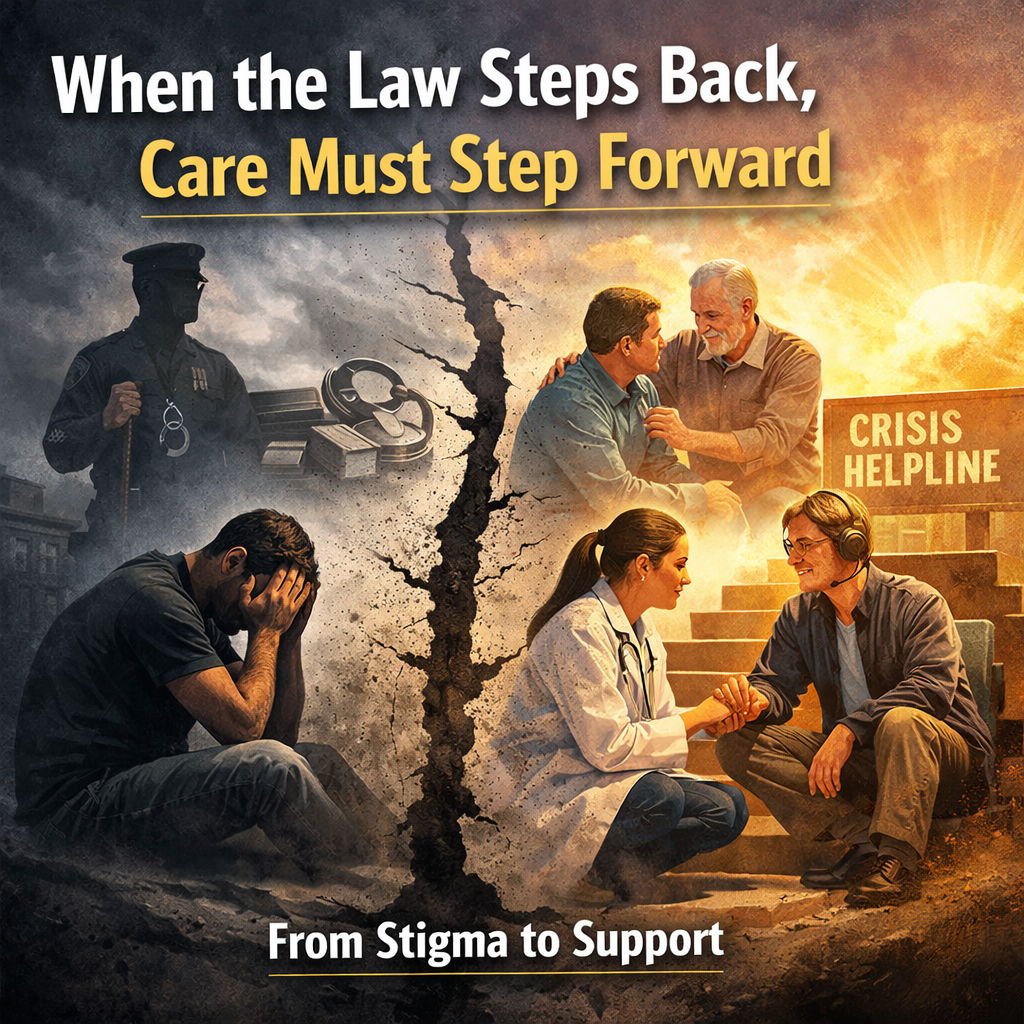
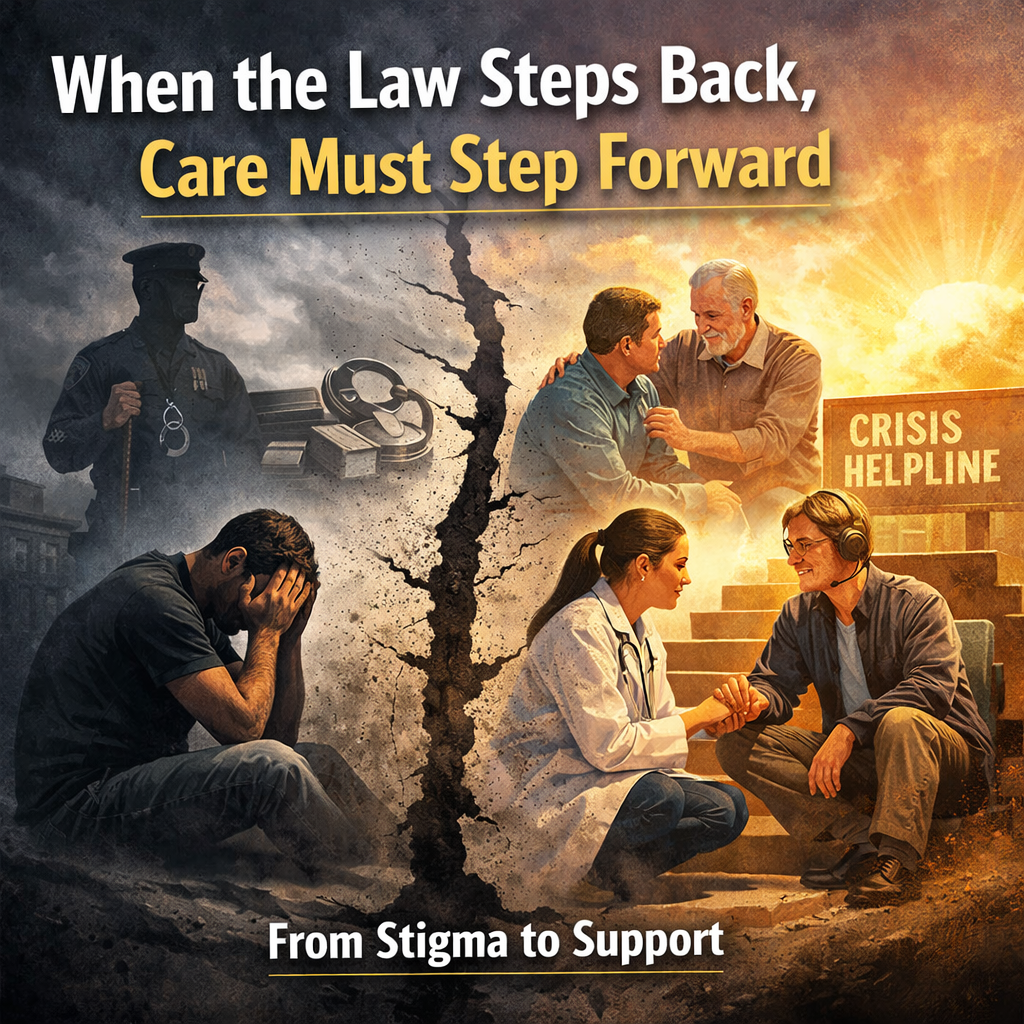
India is now undergoing a historic legal transformation. The Mental Healthcare Act, 2017 recognised that attempted suicide is usually the result of severe stress and should not be punished. However, the older criminal law technically remained in place, creating confusion.
The Bharatiya Nyaya Sanhita (BNS), set to replace the colonial-era penal code, removes the provision that criminalised attempted suicide. This shift signals a move from viewing suicide attempts as crimes to understanding them as mental health crises.
Decriminalisation can reduce stigma, encourage help-seeking, and improve the accuracy of reporting. But legal reform must be accompanied by practical change. Police, healthcare workers, and first responders need clear guidelines. Hospitals must treat suicide attempts primarily as medical emergencies, not legal cases. Support systems — counselling, crisis helplines, and follow-up care — must be strengthened so that individuals receive help rather than judgment.
Policy Responses: Progress and Gaps
The launch of a National Suicide Prevention Strategy marked an important policy milestone. Recent budgets emphasise mental health infrastructure and workforce expansion. Yet implementation remains uneven. Legal reform, though essential, will not reduce suicides unless matched by accessible services, economic protections, and community support.
Beyond Individual Blame: A Societal Lens
One of the most harmful misconceptions about suicide is that it is purely an individual choice or failure. In reality, suicide emerges from an interaction of personal vulnerability and social context. Economic insecurity, educational systems that equate worth with performance, digital cultures of comparison, eroding community bonds — and, until recently, punitive legal frameworks — have all shaped the emotional landscapes in which suicidal thoughts arise.
Understanding suicide as a public health issue — not a moral or criminal failing — shifts the focus from blame to prevention.
Pathways to Prevention
- Strengthening Mental Health Systems
- Reforming Educational Environments
- Economic Safety Nets
- Community Connection
- Responsible Media and Digital Practices
- Public Awareness and Stigma Reduction
- Effective Implementation of Decriminalisation, including training for police and healthcare providers and clear protocols prioritising care over punishment.
A Collective Reckoning
Rising suicides confront us with uncomfortable questions. What kind of society leaves children afraid of report cards, farmers afraid of creditors, workers afraid of unemployment, and elders afraid of becoming burdens?
India now stands at a critical moment. By moving away from criminalising suicide attempts, the country has taken an important step toward compassion. But laws alone cannot save lives. Prevention demands investment in care, reduction of stigma, stronger communities, and the courage to treat emotional suffering as a shared responsibility.
Suicide is preventable. But prevention requires not only policies and programs — it requires a society willing to listen, to support, and to act before despair turns fatal.