Newspapers not fact-checked but replicated content online?

The Bombay High Court reserved its verdict in petitions challenging the introduction of Fact-Check Units through the amended IT Rules, 2023.

By Advocate Suresh Tripathi |Published: 2023-10-04


Placeholder article image


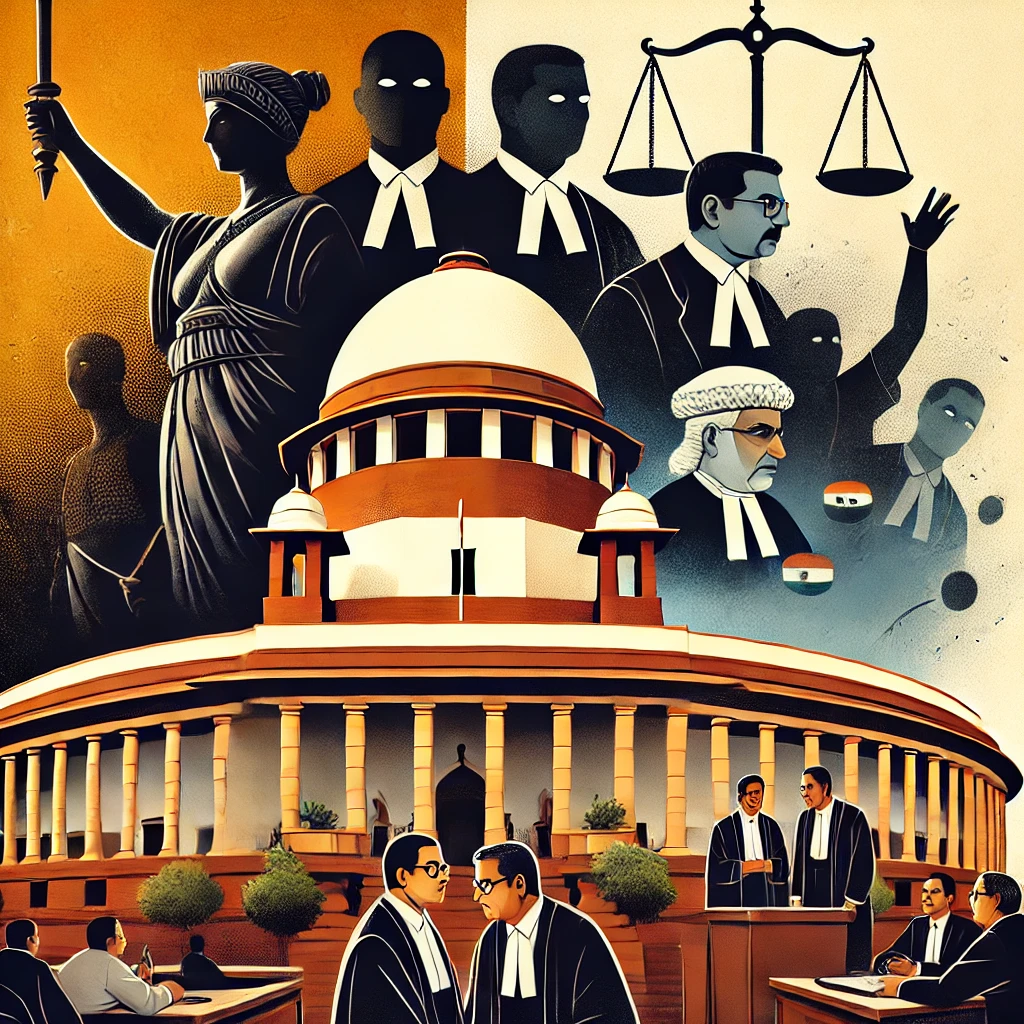
The Bombay High Court today pointed out a contradiction in the fact that the amendments to the Information Technology Rules for intermediaries would not be applicable to newspapers, but only to their online platforms that may replicate the same information. 

A Bench of Justice GS Patel and Justice Neela Gokhale made the remark while hearing petitions challenging amendments to the Information Technology (Intermediary Guidelines and Digital Media Ethics Code) Amendment Rules, 2023.

“Business of the government is the business of every newspaper. We are leaving aside people like Mr. Kamra, who has other concerns or objectives. Is there any obligation on newspaper to print only that which the government approves? If there is no such obligation on newspaper and then take the exact same item from their website and replicate it on social media platforms, this directive is only for the social media platform. The other (newspaper) remains untouched. This is something I am not able to deal with", Justice Patel remarked.

The Bench today reserved its verdict in the four petitions filed by stand-up comic Kunal Kamra, the Editors Guild of India, the Association of Indian Magazines and the News Broadcast and Digital Association.

It indicated that it would try to pronounce the judgment by December 1, 2023. 

Solicitor General Tushar Mehta, arguing for the Union Ministry of Electronics and Information Technology (MEITY), assured the Court that the Ministry would not notify the formation of Fact-Check Units (FCUs) till the judgment is pronounced.

The petitions challenged the IT Rules amendments, more specifically, Rule 3, which provides that the Central government can form a Fact-Check Unit (FCU) which is empowered to identify and tag what it considers false or fake online news with respect to any of the government's activities.

Senior Advocates Navroz Seervai and Arvind Datar, along with Advocates Shadan Farasat and Gautam Bhatia, urged the Court to set aside the provisions of the amendment under challenge on the following grounds:

  • Rules of 2023 are arbitrary and unconstitutional; ultra vires Articles 14 and 19(1)(a) (freedom of speech and expression) and 19(1)(g) (right to trade and business) of the Constitution and section 79 (exemption from liability of intermediary in certain cases) of the Information Technology Act.
  • Amendments do not fall within the scope of reasonable restrictions on freedom of speech provided in Article 19(2) of the Constitution. 
  • Cannot create an executive authority on what can be posted and what cannot be. Only guidelines can be issued.
  • Rules of 2023 did not follow the principles of natural justice as there is no provision for show-cause notice before taking action.
  • The definitions in the Rules for what is “blatantly false, fake and misleading” and “government business” are not specific but ambiguous and over-broad. 
  • Rules of 2023 have a “chilling effect” - the provisions give the government “monopolistic power” to decide what information is required to be circulated about its functioning. 
  • The government would be a judge to ascertain the veracity of information available on social media. 
  • The user whose content has been flagged would have no recourse in law to challenge any takedown of his content, except under a writ petition, which may be difficult considering there are questions of facts involved. 
  • The communication by FCU is a mandate and not an advisory.

SG Tushar Mehta opposed the submissions of the petitioners, claiming that they had misunderstood the amendments on the following grounds: 

  • Rules do not prohibit any expression of opinion or critical analysis against the government, but are only intended to rein in false news.
  • Rules were framed taking into consideration the fundamental rights of five stakeholders - the internet user, the intermediary, the recipient, the government and the public at large.
  • It neither contains penal provisions nor does it criminalise anything.
  • When FCU flags any content to the intermediary, it does not lead to an automatic take down of the content. The intermediary had a choice to either take it down right away or just put a disclaimer that the content has been flagged. 
  • Any person aggrieved by the content could drag the intermediary to court, which would finally decide whether the content is false or not. 
  • FCU’s monitoring was restricted strictly to the business of the Central government, which included details about the policies, programmes, notifications, rules, regulations, implementation, etc.
  • Rules governed only the “facts” regarding “government business” which was a well-demarcated term including whatever the executive does to discharge its functions within the Constitution.
  • Rules were not intended to interfere in citizens’ right to free speech.

Suresh Tripathi Attorneys: Best Law Advocate in Allahabad Logo
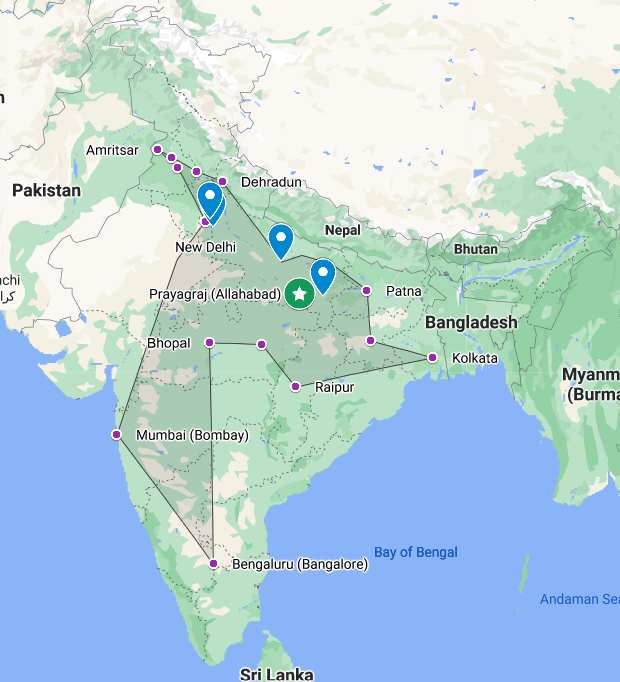
Suresh Tripathi Attorneys: Best Law Advocate in Allahabad Service Locations Map

PRACTICE AREAS

Anticipatory Bail

Arbitration and Mediation

Central Administrative

Civil Law

Competition & Antitrust

Constitutional Rights

Consumer Court Complaints

Corporate Litigation

Covid-19 & Medical

Criminal Defense

Debt Recovery

Divorce Lawyer

Environmental Law

Family Lawyer

Insolvency & Bankruptcy

Insurance & Claims

Intellectual Property

IT Cyber Law

Labor & Employment

Lok Adalat

NCLT

NGOs & Trusts

Personal Injury Accidents

Pro bono

Real Estate & Property

Regulatory & Policy

Renewable Energy Infrastructure

Service Matters

Sports Contracts

Taxation Law

LOCATIONS

Prayagraj/Allahabad

Lucknow

New Delhi & NCR

Noida-Ghaziabad

Mumbai/Bombay

Varanasi

Chandigarh

Amritsar

Jalandhar

Agra

Raebareli

Amethi

Kolkata/Calcutta

Dehradun

Bangalore/Bengaluru

Bhopal

Patna

Ranchi

Raipur

Ludhiana

Jabalpur

Kanpur

Pratapgarh

Sultanpur

Newspapers not fact-checked but replicated content online?

The Bombay High Court reserved its verdict in petitions challenging the introduction of Fact-Check Units through the amended IT Rules, 2023.

By Advocate Suresh Tripathi |Published: 2023-10-04


Placeholder article image

The Bombay High Court today pointed out a contradiction in the fact that the amendments to the Information Technology Rules for intermediaries would not be applicable to newspapers, but only to their online platforms that may replicate the same information. 

A Bench of Justice GS Patel and Justice Neela Gokhale made the remark while hearing petitions challenging amendments to the Information Technology (Intermediary Guidelines and Digital Media Ethics Code) Amendment Rules, 2023.

“Business of the government is the business of every newspaper. We are leaving aside people like Mr. Kamra, who has other concerns or objectives. Is there any obligation on newspaper to print only that which the government approves? If there is no such obligation on newspaper and then take the exact same item from their website and replicate it on social media platforms, this directive is only for the social media platform. The other (newspaper) remains untouched. This is something I am not able to deal with", Justice Patel remarked.

The Bench today reserved its verdict in the four petitions filed by stand-up comic Kunal Kamra, the Editors Guild of India, the Association of Indian Magazines and the News Broadcast and Digital Association.

It indicated that it would try to pronounce the judgment by December 1, 2023. 

Solicitor General Tushar Mehta, arguing for the Union Ministry of Electronics and Information Technology (MEITY), assured the Court that the Ministry would not notify the formation of Fact-Check Units (FCUs) till the judgment is pronounced.

The petitions challenged the IT Rules amendments, more specifically, Rule 3, which provides that the Central government can form a Fact-Check Unit (FCU) which is empowered to identify and tag what it considers false or fake online news with respect to any of the government's activities.

Senior Advocates Navroz Seervai and Arvind Datar, along with Advocates Shadan Farasat and Gautam Bhatia, urged the Court to set aside the provisions of the amendment under challenge on the following grounds:

  • Rules of 2023 are arbitrary and unconstitutional; ultra vires Articles 14 and 19(1)(a) (freedom of speech and expression) and 19(1)(g) (right to trade and business) of the Constitution and section 79 (exemption from liability of intermediary in certain cases) of the Information Technology Act.
  • Amendments do not fall within the scope of reasonable restrictions on freedom of speech provided in Article 19(2) of the Constitution. 
  • Cannot create an executive authority on what can be posted and what cannot be. Only guidelines can be issued.
  • Rules of 2023 did not follow the principles of natural justice as there is no provision for show-cause notice before taking action.
  • The definitions in the Rules for what is “blatantly false, fake and misleading” and “government business” are not specific but ambiguous and over-broad. 
  • Rules of 2023 have a “chilling effect” - the provisions give the government “monopolistic power” to decide what information is required to be circulated about its functioning. 
  • The government would be a judge to ascertain the veracity of information available on social media. 
  • The user whose content has been flagged would have no recourse in law to challenge any takedown of his content, except under a writ petition, which may be difficult considering there are questions of facts involved. 
  • The communication by FCU is a mandate and not an advisory.

SG Tushar Mehta opposed the submissions of the petitioners, claiming that they had misunderstood the amendments on the following grounds: 

  • Rules do not prohibit any expression of opinion or critical analysis against the government, but are only intended to rein in false news.
  • Rules were framed taking into consideration the fundamental rights of five stakeholders - the internet user, the intermediary, the recipient, the government and the public at large.
  • It neither contains penal provisions nor does it criminalise anything.
  • When FCU flags any content to the intermediary, it does not lead to an automatic take down of the content. The intermediary had a choice to either take it down right away or just put a disclaimer that the content has been flagged. 
  • Any person aggrieved by the content could drag the intermediary to court, which would finally decide whether the content is false or not. 
  • FCU’s monitoring was restricted strictly to the business of the Central government, which included details about the policies, programmes, notifications, rules, regulations, implementation, etc.
  • Rules governed only the “facts” regarding “government business” which was a well-demarcated term including whatever the executive does to discharge its functions within the Constitution.
  • Rules were not intended to interfere in citizens’ right to free speech.