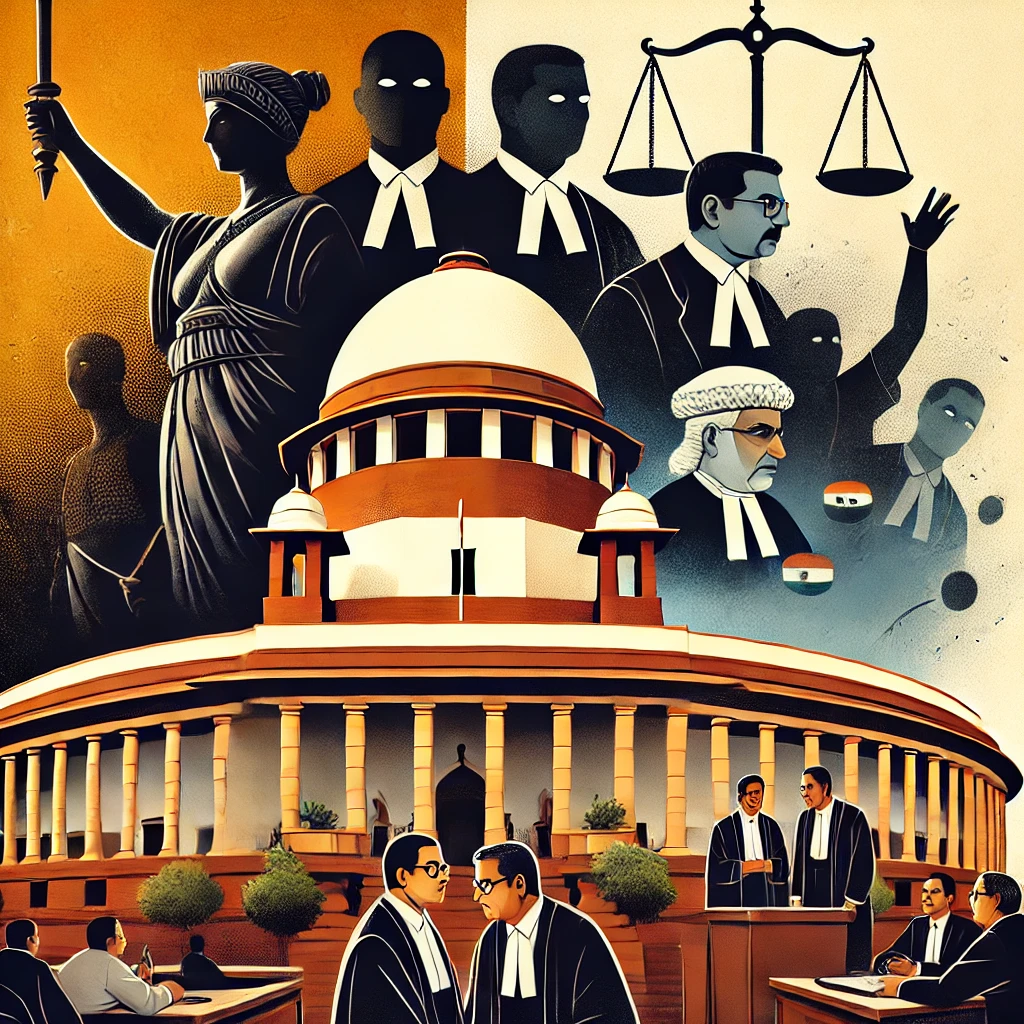
Need to Reform India's Outdated Procedural Laws

The Procedural laws play a critical role in ensuring access to justice and the efficient functioning of the legal system.

By Advocate Suresh Tripathi |Published: 2023-09-30


Placeholder article image


India's legal system faces numerous challenges and inefficiencies, particularly in its procedural laws, which are relics of the colonial era. These outdated laws are ill-suited to the needs of modern society and contribute to significant delays in legal proceedings. The legal system is characterized by a malleable framework that allows clever lawyers to prolong cases through various applications and appeals.

The Procedural laws play a critical role in ensuring access to justice and the efficient functioning of the legal system. However, there are serious concerns with the major procedural laws in India, namely the Civil Procedure Code, Criminal Procedure Code, and Evidence Act.  The current procedural laws are outdated, requiring significant revision to align with modern society's needs. 

The Civil Procedure Code delineates rules for pleadings, territorial jurisdiction, and monetary limits for courts. The time taken to resolve a civil case is alarmingly long, sometimes even astounding. In a typical scenario, an ordinary original suit before a civil court, if contested, can take up to 50 years to conclude and exit the court's threshold.

Following the filing of a complaint, it takes three to four months for the court to issue summons to the defendant. If the defendant is astute and aims to evade service, they can successfully prolong the case by continually rescheduling dates and not appearing for over two years. Often, summonses are sent to the defendant only to be returned for trivial reasons, often due to spurious endorsements by process servers. When this happens, the court orders the issuance of summons by registered post. The defendant employs the same strategy with the postal service, successfully evading service. This leads to the court repeatedly instructing the plaintiff to provide the defendant's correct address, extending the process. Sub-service applications, such as serving notices through public announcements or tom-tom beats, become necessary. This process can extend the service of notice to a defendant by two years or more. If multiple defendants are involved, each employing similar tactics in different locations, the time required for serving notices can potentially exceed five years.

The Code offers ample opportunities to extend proceedings indefinitely. Applications can be filed for various reasons, including seeking particulars, interrogatories, local inspections, temporary injunctions, arrest or attachment of assets before judgment, appointment of a receiver, and suits by indigent individuals. Each application necessitates a hearing and disposition on its merits. An aggrieved party can file a Miscellaneous First Appeal or Civil Revision before the High Court after the first appeal, with the possibility of a Miscellaneous Second Appeal. The process of appeal to the Supreme Court is the final stage at the High Court level. Each application can take up to a year to resolve. First appeals take approximately three years, while second appeals and revisions at the High Court level, if admitted, can consume seven to eight years. The cumulative time spent on each application significantly adds to the overall duration of litigation.

Once the defendant is served, they typically appear in court. However, the process does not expedite significantly. The defendant often requests time to engage an advocate, leading to adjournments. The written statement is filed after several delays, and the case proceeds to draft issues. Both parties then seek time to draft issues, followed by the court framing the issues. Parties must now bear the burden of proving these issues. Parties may also file applications for amendments to the issues, triggering objections and hearings. An aggrieved party can resort to revision at the High Court level, further prolonging the process. This preliminary stage alone can consume over four years. Subsequently, numerous opportunities arise for parties to file applications related to the submission of documents, witness lists, and the summoning of documents and witnesses, which collectively take an additional two years. Even during the examination of witnesses, examinations-in-chief, cross-examinations, and re-examinations occur sporadically rather than consistently. Arguments are also heard piecemeal on multiple dates, culminating in the pronouncement of judgment. By the time the judgment is delivered, a civil suit may have taken nearly eight years.

The Civil Procedure Code provides for a first appeal, which can take up to five years to resolve. Section 100 of the Civil Procedure Code then permits a second appeal, which, if admitted, may take seven to eight years. The Indian Constitution allows for an appeal, which, if admitted, can take up to 15 years for resolution. The cumulative time can amount to 31 to 33 years for a single case. Additionally, if the Supreme Court identifies procedural gaps in lower courts, the case may be remanded, repeating the entire process and consuming similar time.

This is an ongoing cycle. As long as the Civil Procedure Code remains unchanged, litigation will take decades to conclude. Legal proceedings initiated today may span three generations of parties.

Similarly, in the Criminal Procedure Code, the insistence on proving guilt places a heavy burden on prosecution, often leading to time-consuming processes that slow down the machinery of justice, especially in criminal cases involving marginalized groups.

There are several factors that contribute to delays in criminal trials:

Case Load: The excessive volume of cases overwhelms the system, affecting efficiency. The Law Commission recommended measures to address this, including reducing holidays in higher courts and increasing working hours.

Service of Summons: Delays often result from the time-consuming process of serving summonses.

Prolix Testimony: Witnesses' lengthy testimonies and excessive cross-examination contribute to time wastage.

Witness Reluctance: Witnesses may be hesitant to appear in court due to various factors, including inadequate provisions for their welfare and safety.

Adjournments and Hearings: The frequent granting of adjournments, sometimes without valid reasons, leads to delays.

Shortage of Judges and Prosecutors: The inadequate number of judges and prosecutors relative to the increasing number of cases is a key factor behind delays.

Irregular Legislation: Poorly drafted laws contribute to litigation, as their interpretation becomes complex.

Scheduling Multiple Cases: The practice of scheduling too many cases on a single day inconveniences parties and witnesses, hindering proceedings.

Mixed Civil and Criminal Cases: When judicial officers handle both civil and criminal cases on the same day, it disrupts the court's workflow.

Absence of Accused: If the accused are absent or no action is taken on their behalf, proceedings can be delayed.

Framing of Charges: Time is often consumed in framing charges, especially when all accused are not present.

Improper Execution of Warrants: Delays occur when police fail to execute warrants promptly.

Criminal trial delays negatively affect both accused and victims. Prolonged detention of accused persons, often in pretrial custody, hampers their legal defense, induces emotional distress, and has socioeconomic consequences for their families. For victims, long trials may lead to loss of evidence, reduced likelihood of conviction, and discouragement from pursuing cases.

To address the persisting issue of lengthy litigation, the following reforms are proposed for procedural laws:

a) Establish Strict Timelines: Implement stringent timelines to ensure that the initial stage of litigation does not exceed three months, the trial of a suit is completed within six months, and the entire process, from filing to judgment, concludes within one year. Appeals should also be disposed of within a year. Implementing these reforms would require appointing a substantial number of judges, along with providing them appropriate compensation.

b) Pre-filing Notices: Require plaintiffs to serve notice to defendants before filing a lawsuit and mandate the submission of documents and witness lists along with the initial pleadings. After filing the suit, the court should promptly notify the defendant to file a written statement within two weeks. Both parties should submit all relevant documents and witness lists to the court, and the court should frame issues within 15 days, scheduling the trial within 30 days.

c) Streamlined Appellate Process: Simplify the appellate process to expedite case resolution.

d) Swift Transfer of Records: Create an efficient process for transferring case records from lower courts to appellate courts.

e) Appointment of More Judges: Ensure the prompt appointment of a higher number of judges to prevent delays caused by judicial vacancies and to match the caseload.

f) Training and Skill Development: Regular training for judges to enhance their skills and efficiency.

g) Special Tribunals: Establishing specialized courts for frequently occurring case types.

h) Promoting Arbitration: Encouraging arbitration in appropriate cases to reduce court workload.

i) Legislative Reforms: Simplifying and clarifying legislation to reduce interpretational disputes.

j) Efficient Case Management: Adopting efficient time management and court scheduling practices.

The right to a speedy trial is fundamental in ensuring justice for all. Delays impact both the accused and victims, and addressing this issue requires concerted efforts in training, judicial appointments, legislative reforms, and efficient case management to uphold the essence of justice in India.

In addition to these procedural reforms, it is essential to revisit the Evidence Act to remove or amend outdated provisions that no longer align with the needs of modern society and social justice. The Execution proceedings also warrant attention and reform to alleviate the burdens placed on decree-holders and judgment debtors.


Suresh Tripathi Attorneys: Best Law Advocate in Allahabad Logo
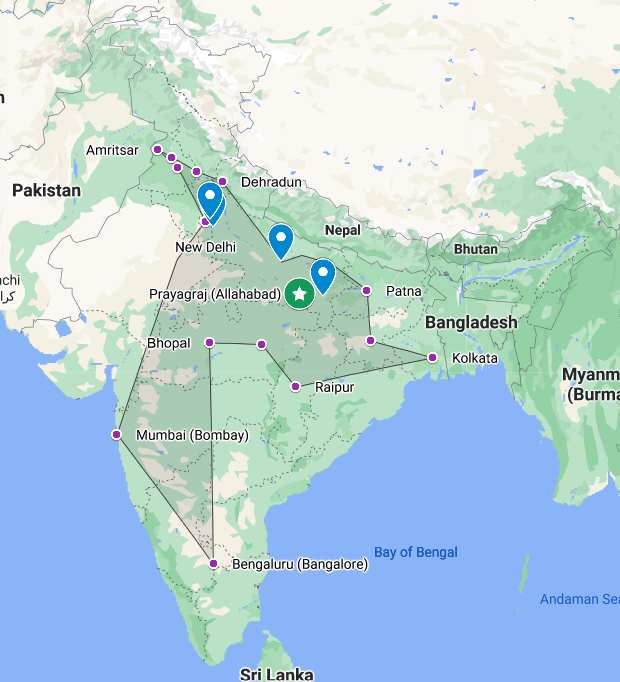
Suresh Tripathi Attorneys: Best Law Advocate in Allahabad Service Locations Map

PRACTICE AREAS

Anticipatory Bail

Arbitration and Mediation

Central Administrative

Civil Law

Competition & Antitrust

Constitutional Rights

Consumer Court Complaints

Corporate Litigation

Covid-19 & Medical

Criminal Defense

Debt Recovery

Divorce Lawyer

Environmental Law

Family Lawyer

Insolvency & Bankruptcy

Insurance & Claims

Intellectual Property

IT Cyber Law

Labor & Employment

Lok Adalat

NCLT

NGOs & Trusts

Personal Injury Accidents

Pro bono

Real Estate & Property

Regulatory & Policy

Renewable Energy Infrastructure

Service Matters

Sports Contracts

Taxation Law

LOCATIONS

Prayagraj/Allahabad

Lucknow

New Delhi & NCR

Noida-Ghaziabad

Mumbai/Bombay

Varanasi

Chandigarh

Amritsar

Jalandhar

Agra

Raebareli

Amethi

Kolkata/Calcutta

Dehradun

Bangalore/Bengaluru

Bhopal

Patna

Ranchi

Raipur

Ludhiana

Jabalpur

Kanpur

Pratapgarh

Sultanpur

Need to Reform India's Outdated Procedural Laws

The Procedural laws play a critical role in ensuring access to justice and the efficient functioning of the legal system.

By Advocate Suresh Tripathi |Published: 2023-09-30


Placeholder article image

India's legal system faces numerous challenges and inefficiencies, particularly in its procedural laws, which are relics of the colonial era. These outdated laws are ill-suited to the needs of modern society and contribute to significant delays in legal proceedings. The legal system is characterized by a malleable framework that allows clever lawyers to prolong cases through various applications and appeals.

The Procedural laws play a critical role in ensuring access to justice and the efficient functioning of the legal system. However, there are serious concerns with the major procedural laws in India, namely the Civil Procedure Code, Criminal Procedure Code, and Evidence Act.  The current procedural laws are outdated, requiring significant revision to align with modern society's needs. 

The Civil Procedure Code delineates rules for pleadings, territorial jurisdiction, and monetary limits for courts. The time taken to resolve a civil case is alarmingly long, sometimes even astounding. In a typical scenario, an ordinary original suit before a civil court, if contested, can take up to 50 years to conclude and exit the court's threshold.

Following the filing of a complaint, it takes three to four months for the court to issue summons to the defendant. If the defendant is astute and aims to evade service, they can successfully prolong the case by continually rescheduling dates and not appearing for over two years. Often, summonses are sent to the defendant only to be returned for trivial reasons, often due to spurious endorsements by process servers. When this happens, the court orders the issuance of summons by registered post. The defendant employs the same strategy with the postal service, successfully evading service. This leads to the court repeatedly instructing the plaintiff to provide the defendant's correct address, extending the process. Sub-service applications, such as serving notices through public announcements or tom-tom beats, become necessary. This process can extend the service of notice to a defendant by two years or more. If multiple defendants are involved, each employing similar tactics in different locations, the time required for serving notices can potentially exceed five years.

The Code offers ample opportunities to extend proceedings indefinitely. Applications can be filed for various reasons, including seeking particulars, interrogatories, local inspections, temporary injunctions, arrest or attachment of assets before judgment, appointment of a receiver, and suits by indigent individuals. Each application necessitates a hearing and disposition on its merits. An aggrieved party can file a Miscellaneous First Appeal or Civil Revision before the High Court after the first appeal, with the possibility of a Miscellaneous Second Appeal. The process of appeal to the Supreme Court is the final stage at the High Court level. Each application can take up to a year to resolve. First appeals take approximately three years, while second appeals and revisions at the High Court level, if admitted, can consume seven to eight years. The cumulative time spent on each application significantly adds to the overall duration of litigation.

Once the defendant is served, they typically appear in court. However, the process does not expedite significantly. The defendant often requests time to engage an advocate, leading to adjournments. The written statement is filed after several delays, and the case proceeds to draft issues. Both parties then seek time to draft issues, followed by the court framing the issues. Parties must now bear the burden of proving these issues. Parties may also file applications for amendments to the issues, triggering objections and hearings. An aggrieved party can resort to revision at the High Court level, further prolonging the process. This preliminary stage alone can consume over four years. Subsequently, numerous opportunities arise for parties to file applications related to the submission of documents, witness lists, and the summoning of documents and witnesses, which collectively take an additional two years. Even during the examination of witnesses, examinations-in-chief, cross-examinations, and re-examinations occur sporadically rather than consistently. Arguments are also heard piecemeal on multiple dates, culminating in the pronouncement of judgment. By the time the judgment is delivered, a civil suit may have taken nearly eight years.

The Civil Procedure Code provides for a first appeal, which can take up to five years to resolve. Section 100 of the Civil Procedure Code then permits a second appeal, which, if admitted, may take seven to eight years. The Indian Constitution allows for an appeal, which, if admitted, can take up to 15 years for resolution. The cumulative time can amount to 31 to 33 years for a single case. Additionally, if the Supreme Court identifies procedural gaps in lower courts, the case may be remanded, repeating the entire process and consuming similar time.

This is an ongoing cycle. As long as the Civil Procedure Code remains unchanged, litigation will take decades to conclude. Legal proceedings initiated today may span three generations of parties.

Similarly, in the Criminal Procedure Code, the insistence on proving guilt places a heavy burden on prosecution, often leading to time-consuming processes that slow down the machinery of justice, especially in criminal cases involving marginalized groups.

There are several factors that contribute to delays in criminal trials:

Case Load: The excessive volume of cases overwhelms the system, affecting efficiency. The Law Commission recommended measures to address this, including reducing holidays in higher courts and increasing working hours.

Service of Summons: Delays often result from the time-consuming process of serving summonses.

Prolix Testimony: Witnesses' lengthy testimonies and excessive cross-examination contribute to time wastage.

Witness Reluctance: Witnesses may be hesitant to appear in court due to various factors, including inadequate provisions for their welfare and safety.

Adjournments and Hearings: The frequent granting of adjournments, sometimes without valid reasons, leads to delays.

Shortage of Judges and Prosecutors: The inadequate number of judges and prosecutors relative to the increasing number of cases is a key factor behind delays.

Irregular Legislation: Poorly drafted laws contribute to litigation, as their interpretation becomes complex.

Scheduling Multiple Cases: The practice of scheduling too many cases on a single day inconveniences parties and witnesses, hindering proceedings.

Mixed Civil and Criminal Cases: When judicial officers handle both civil and criminal cases on the same day, it disrupts the court's workflow.

Absence of Accused: If the accused are absent or no action is taken on their behalf, proceedings can be delayed.

Framing of Charges: Time is often consumed in framing charges, especially when all accused are not present.

Improper Execution of Warrants: Delays occur when police fail to execute warrants promptly.

Criminal trial delays negatively affect both accused and victims. Prolonged detention of accused persons, often in pretrial custody, hampers their legal defense, induces emotional distress, and has socioeconomic consequences for their families. For victims, long trials may lead to loss of evidence, reduced likelihood of conviction, and discouragement from pursuing cases.

To address the persisting issue of lengthy litigation, the following reforms are proposed for procedural laws:

a) Establish Strict Timelines: Implement stringent timelines to ensure that the initial stage of litigation does not exceed three months, the trial of a suit is completed within six months, and the entire process, from filing to judgment, concludes within one year. Appeals should also be disposed of within a year. Implementing these reforms would require appointing a substantial number of judges, along with providing them appropriate compensation.

b) Pre-filing Notices: Require plaintiffs to serve notice to defendants before filing a lawsuit and mandate the submission of documents and witness lists along with the initial pleadings. After filing the suit, the court should promptly notify the defendant to file a written statement within two weeks. Both parties should submit all relevant documents and witness lists to the court, and the court should frame issues within 15 days, scheduling the trial within 30 days.

c) Streamlined Appellate Process: Simplify the appellate process to expedite case resolution.

d) Swift Transfer of Records: Create an efficient process for transferring case records from lower courts to appellate courts.

e) Appointment of More Judges: Ensure the prompt appointment of a higher number of judges to prevent delays caused by judicial vacancies and to match the caseload.

f) Training and Skill Development: Regular training for judges to enhance their skills and efficiency.

g) Special Tribunals: Establishing specialized courts for frequently occurring case types.

h) Promoting Arbitration: Encouraging arbitration in appropriate cases to reduce court workload.

i) Legislative Reforms: Simplifying and clarifying legislation to reduce interpretational disputes.

j) Efficient Case Management: Adopting efficient time management and court scheduling practices.

The right to a speedy trial is fundamental in ensuring justice for all. Delays impact both the accused and victims, and addressing this issue requires concerted efforts in training, judicial appointments, legislative reforms, and efficient case management to uphold the essence of justice in India.

In addition to these procedural reforms, it is essential to revisit the Evidence Act to remove or amend outdated provisions that no longer align with the needs of modern society and social justice. The Execution proceedings also warrant attention and reform to alleviate the burdens placed on decree-holders and judgment debtors.